A Christmas Angel Graphic for Creative Business Products
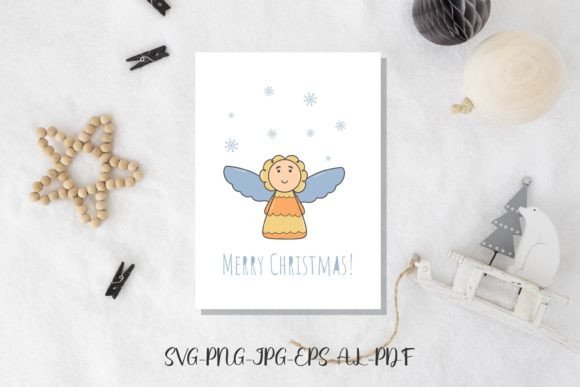
When preparing a seasonal collection for my Etsy shop or digital marketplace, the first thing I look at is whether a design asset has a clear visual personality. Opening the ZIP file for this Christmas Card with an Angel illustration, my immediate impression is one of traditional elegance with a touch of softness. The angel motif paired with the "Merry Christmas" lettering feels festive and decorative, leaning towards a classic, feminine, and perhaps slightly rustic holiday mood. It doesn’t scream bold or ultra-modern; instead, it has a warmth that would likely appeal to customers looking for heartfelt, decorative holiday items. This isn't a minimalist graphic—it's a decorative illustration meant to be a central, beautiful element.
Niche Appeal and Target Audience for This Holiday Illustration
This kind of graphic design asset has a specific niche. It resonates with buyers who prefer traditional Christmas imagery over trendy or abstract designs. I imagine it attracting customers for things like family Christmas cards, cozy home decor items, or gifts for someone with a more classic aesthetic. As a seller, that’s useful information. It tells me that if my shop or brand leans into a warm, traditional, or handmade-style holiday collection, this angel illustration could be a strong fit. If my audience is all about sleek, minimalist geometric patterns, this might not be the right choice. Understanding that before I even start creating products saves a lot of time.
Testing the Asset Across Potential Selling Formats
Before I list anything, I test a new digital product like this across a range of formats to see where it performs best. The included SVG, AI, and EPS files are crucial for this. Here’s a practical run-through from a seller’s perspective.
First, I’d open the SVG in my design software and perhaps a program like Cricut Design Space. I need to see if the cut lines are clean and well-defined for potential sticker designs, scrapbooking elements, or appliqué projects. A complex illustration can sometimes have tiny details that don’t cut well on vinyl or paper. Then, using the vector files, I’d create PNGs with transparent backgrounds. These are my go-to for printable wall art, planner stickers, sublimation designs for mugs and totes, and as graphics for Canva templates.
I’d immediately place the design onto a few real-world mockups. How does it look as a centerpiece on a greeting card or invitation template? Does it scale nicely for a t-shirt graphic or a large decorative pillow design? I’d also test it in a more crowded layout, like a seasonal digital paper pack or a blog graphic banner, to see if it maintains its visual hierarchy. This hands-on testing tells me if the asset is versatile or if it's best used as a standalone focal point.
Where This Angel Graphic Works Best for Product Presentation
From my experience, this Christmas Card with an Angel works beautifully in certain commercial design contexts. Its decorative nature makes it ideal for large product previews where you want the detail to be visible. Think of it as the hero image on a printable holiday card listing, a detailed mockup of a pillow, or the featured art on a shopper bag. It lends itself well to themed bundles—you could pair it with other classic holiday illustrations like candles, trees, or script fonts to create a cohesive "Traditional Christmas" digital product collection.
This kind of illustration also boosts product presentation. A strong, attractive graphic like this creates better thumbnail appeal on Etsy or Creative Fabrica. It helps with visual storytelling in your listing images, suggesting a quality and finished look that builds customer trust and perceived value. When you use it in social media promos for your digital shop or print-on-demand store, it provides a professional, ready-to-use visual that aligns with the festive season.
Potential Pitfalls and Seller Checks to Perform
No asset is perfect for every single application, and a savvy seller knows where to be cautious. With this illustration, I would be careful using it for extremely tiny details, like very small planner stickers where intricate lines might become blurry or lost. Overly complex layouts could also drown out its elegance—it needs space to breathe.
I’d always check how it looks on both white and dark backgrounds before finalizing a product. Some elegant details might disappear on a dark-colored t-shirt mockup if the contrast isn't adjusted. For any product where clean cutting lines are critical, like a detailed Cricut project, I’d inspect the SVG paths thoroughly in my software. Also, while the "Merry Christmas" lettering is integrated, if I were creating a text-heavy template like an invitation, I’d ensure the illustration doesn’t compete with my additional customer text. It might work best paired with a simple sans serif or a complementary script font for added information.
Building a Professional Collection Around a Single Asset
One of the strengths of a well-made graphic design asset is its ability to serve as a foundation. This Christmas angel illustration isn't just for one product. With the commercial license typically included with such files, I can envision building a small seasonal sub-brand around it. Here’s a realistic approach.
I could start with core digital downloads: a printable greeting card template, a set of PNG stickers, and an SVG bundle for crafters. Then, expand into print-on-demand merchandise using the same graphic: a t-shirt design, a mug, and a tote bag. Each product uses the same central asset, but presented differently—this creates brand consistency for my shop during the holiday season. I could even create a simple Canva template where buyers can drop this PNG into their own social media graphics or blog headers.
The key is organization. When I sell the finished products, I need to ensure my customer files are clear. If I’m bundling this illustration with others, I’ll keep the original SVG, AI, and EPS files neatly labeled in the ZIP. For my own quality control, I test print colors if offering physical printables, verify the PNG transparency is flawless, and confirm the resolution is high enough for large format prints if I’m offering wall art. These small, practical steps prevent customer issues and support a professional reputation.
Final Thoughts for the Creative Entrepreneur
Evaluating the Christmas Card with an Angel from a business-minded perspective, it’s a useful digital product for sellers targeting a traditional holiday aesthetic. Its value lies in its decorative, finished quality and the provision of core vector and transparent file formats. It’s not a generic clipart; it’s a complete illustration ready to be deployed.
For Etsy sellers, POD entrepreneurs, Cricut users, and template creators, the real test is always in application. Before publishing any listing, take this graphic and mock up three to five different products you might actually sell. See how it looks as a thumbnail. Assess its versatility. Pair it with different font styles—a serif for elegance, a handwritten font for warmth—to see what combinations work. This process reveals its true commercial potential and any limitations.
Used thoughtfully, this kind of holiday illustration can help elevate a seasonal collection, providing a cohesive and attractive visual centerpiece that enhances perceived value and click-through potential. It’s a practical building block for a creative business’s holiday lineup, provided it aligns with your brand’s style and your customer’s expectations.